Difference Between Social Engineering and Cyber Attack Explained
Social engineering bypasses technical defenses by manipulating human psychology, making it the human equivalent of a cyber attack rather than a separate category.
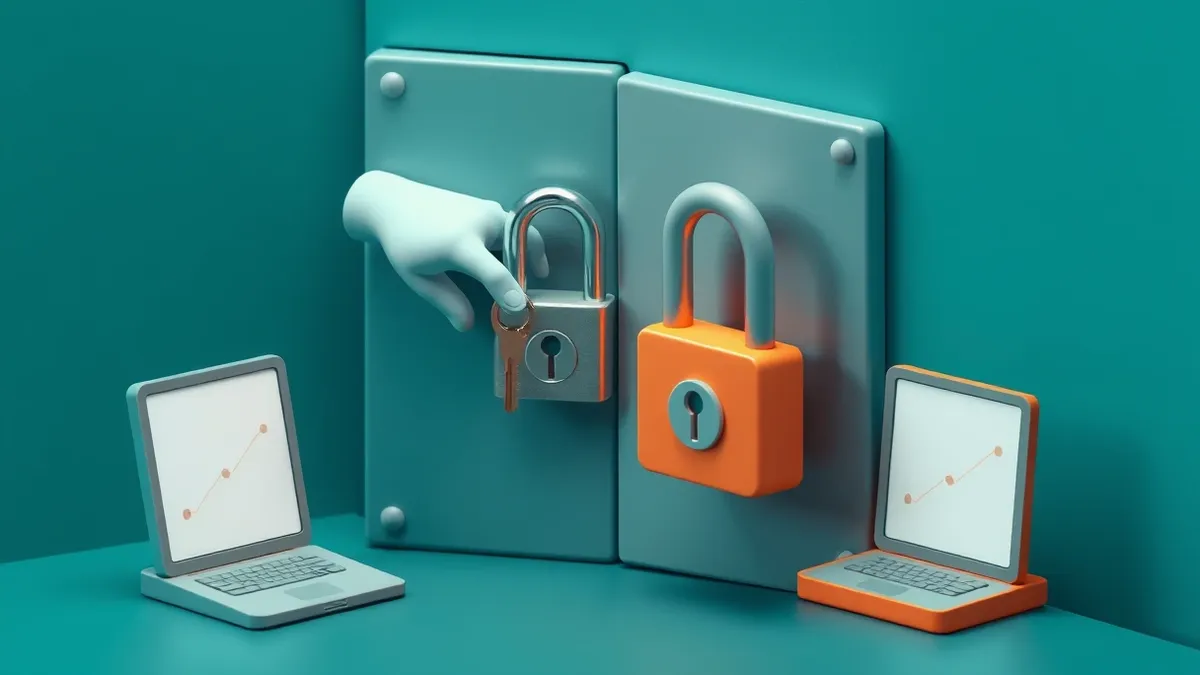
Social engineering is not separate from cyber attacks; it is a method used within them. While traditional attacks exploit software vulnerabilities, social engineering exploits human trust. Both aim to gain unauthorized access, but one targets code and the other targets people. Understanding this distinction changes how you defend your organization.
What is the difference between social engineering and cyber attack?
Social engineering is a subset of cyber attacks that targets human psychology instead of software vulnerabilities. Traditional cyber attacks exploit technical flaws in operating systems, applications, or network protocols. Social engineering manipulates individuals into performing actions or revealing information that compromises security. The core difference lies in the attack surface: one is code, the other is people. Both achieve the same result of unauthorized access, but the mechanism differs entirely.
How do attackers use psychological triggers in social engineering?
Attackers exploit cognitive biases such as urgency, authority, and curiosity to bypass rational decision-making. When you feel pressured to act quickly, you skip verification steps. If a request appears to come from a superior, you hesitate to question it. Curiosity leads you to click unknown links. These triggers override your training and technical safeguards. The attacker does not need to break encryption; they simply need you to open the door. This psychological manipulation is the primary driver of successful social engineering campaigns.
Why do technical defenses fail against social engineering?
Firewalls and intrusion prevention systems monitor network traffic for known malicious patterns. They cannot detect a legitimate email from a trusted sender that contains a harmful request. Antivirus software scans files for known signatures, but it cannot judge the intent behind a user clicking a link. Technical controls assume the user acts correctly. Social engineering proves that users often act incorrectly under pressure. This gap between technical capability and human behavior creates a persistent vulnerability that no amount of hardware can close.
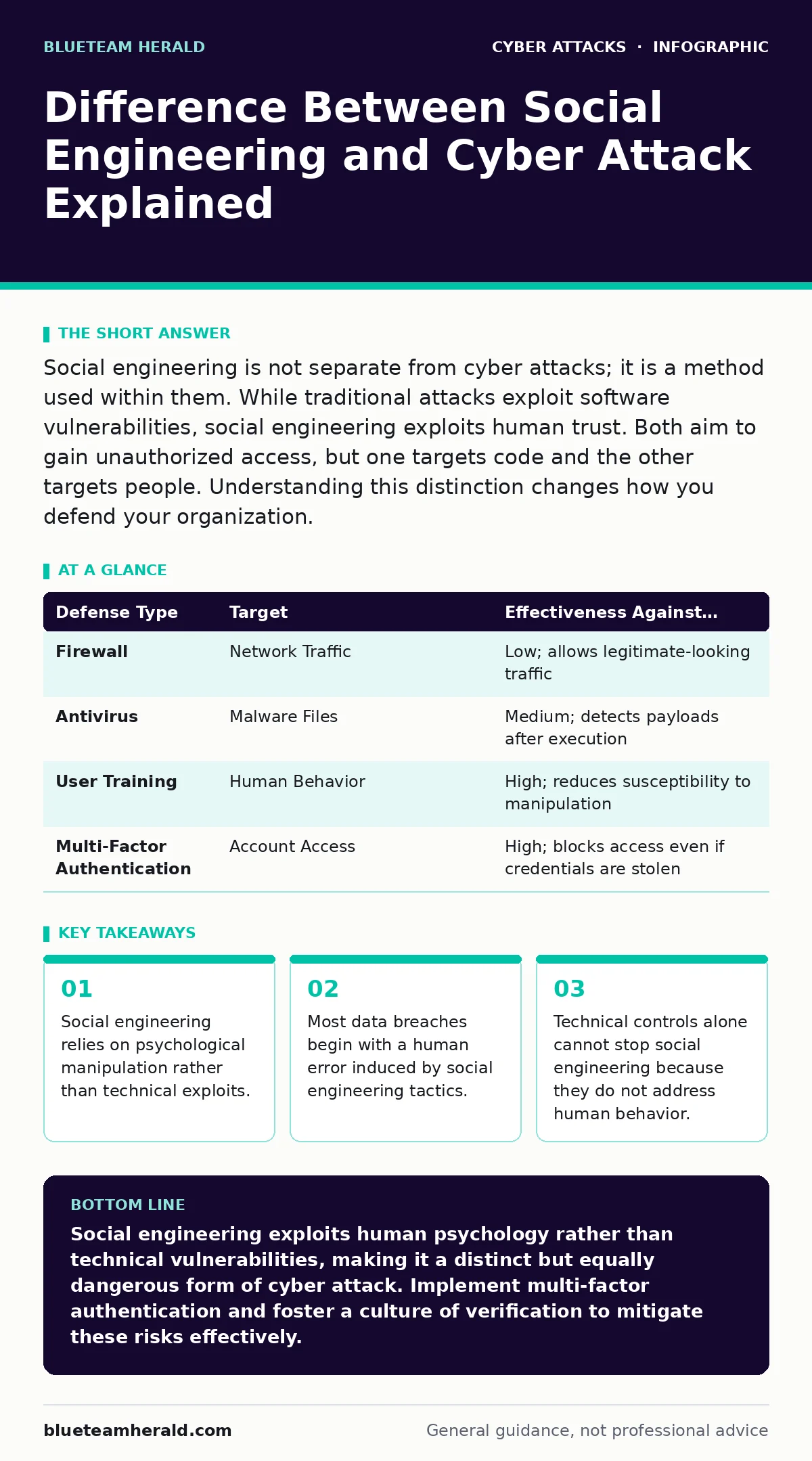
| Defense Type | Target | Effectiveness Against Social Engineering |
|---|---|---|
| Firewall | Network Traffic | Low; allows legitimate-looking traffic |
| Antivirus | Malware Files | Medium; detects payloads after execution |
| User Training | Human Behavior | High; reduces susceptibility to manipulation |
| Multi-Factor Authentication | Account Access | High; blocks access even if credentials are stolen |
What are the most common forms of social engineering?
Phishing remains the most widespread method, using deceptive emails to steal credentials. Spear phishing tailors messages to specific individuals using personal details, increasing success rates. Vishing uses phone calls to create urgency, often mimicking tech support scams or financial institutions. Smishing targets mobile users through text messages, exploiting the immediacy of SMS. Each variant adapts to the communication channel most trusted by the victim. The medium changes, but the psychological manipulation remains consistent across all forms.
How does social engineering lead to account takeover?
Once an attacker obtains your credentials through social engineering, they can bypass standard login security. If you have not enabled multi-factor authentication, the attacker gains full access immediately. Even with multi-factor authentication, attackers may use session hijacking or man-in-the-middle attacks to maintain access. Account takeover allows the attacker to reset passwords, change recovery emails, and access sensitive data. This chain of events turns a simple human error into a complete system compromise. The initial social engineering step is the key that unlocks the rest of the infrastructure.
See also: Detect Gift Card Scams in Logs and User Behavior
Can social engineering bypass multi-factor authentication?
Multi-factor authentication adds a layer of security by requiring a second form of verification. However, attackers can use real-time social engineering to bypass this. They may call you while you are logging in, pretending to be IT support, and ask for the code you just received. This is known as angler phishing or real-time credential harvesting. If you provide the code, the attacker completes the login before you can react. Multi-factor authentication protects against stolen passwords, but it does not protect against a user who willingly shares the second factor under manipulation.
What role does incident response play after a social engineering breach?
Incident response plans must account for human error as a primary threat vector. When a breach occurs, the first step is to isolate the affected account and reset credentials. You must also review recent activities to determine the scope of the compromise. If the attacker gained administrative privileges, you may need to audit logs for other compromised accounts. Effective response requires speed and clear communication. Delaying action allows the attacker to move laterally within the network, increasing the damage. A structured plan ensures you address both the technical and human aspects of the breach.
How do you defend against social engineering effectively?
Defense requires a combination of technical controls and continuous education. Implement strict email filtering to reduce the volume of phishing attempts. Use multi-factor authentication on all accounts to add a barrier even if credentials are stolen. Conduct regular training that simulates real-world attacks, not just theoretical scenarios. Encourage a culture where questioning requests is rewarded, not punished. If an employee questions a suspicious request, reinforce that behavior. This cultural shift is the most powerful defense against social engineering, as it turns every user into a security checkpoint.
What is the long-term impact of social engineering on security?
Social engineering evolves as technology improves, shifting the focus from technical flaws to human behavior. As organizations invest heavily in cybersecurity tools, attackers find it easier to manipulate people than to break code. This trend will continue, making human-centric defense strategies increasingly important. You must accept that technical perfection is impossible, but human resilience can be improved. By focusing on awareness and verification, you reduce the likelihood of successful attacks. The goal is not to eliminate risk, but to manage it effectively through a combination of technology and human vigilance.
Key takeaways
- Social engineering relies on psychological manipulation rather than technical exploits.
- Most data breaches begin with a human error induced by social engineering tactics.
- Technical controls alone cannot stop social engineering because they do not address human behavior.
Social engineering exploits human psychology rather than technical vulnerabilities, making it a distinct but equally dangerous form of cyber attack. Implement multi-factor authentication and foster a culture of verification to mitigate these risks effectively.
Frequently asked questions
Is social engineering illegal?
Yes, social engineering is illegal when used to gain unauthorized access or steal data. It violates computer fraud and abuse laws in many jurisdictions.
How can I tell if an email is a social engineering attempt?
Look for urgency, requests for sensitive information, and mismatches in sender addresses. Legitimate organizations rarely ask for passwords or payment details via email.
Does multi-factor authentication stop all social engineering?
No, multi-factor authentication reduces risk but does not stop real-time manipulation where attackers trick users into sharing codes.
What should I do if I suspect a social engineering attack?
Report it immediately to your security team. Do not click links or provide information. Isolate the device if possible to prevent further compromise.
How this guide was produced: written by the BlueTeam Herald editorial team with AI assistance, checked against the public references listed below, and reviewed when the facts change. See our editorial policy or report an error.