
Threat Intelligence
OSINT investigation cleanup: containment and recovery steps
Exposing internal assets via open-source intelligence often triggers rapid attacker pivoting before formal containment begins.
Threat Intelligence coverage from BlueTeam Herald holds 22 articles, 20 of them reference guides. The newest was published on October 19, 2026. New stories are added as soon as they are confirmed, from more than 150 sources checked as often as every 45 seconds. Each story lists its sources. Primary sources we follow for this section include MITRE ATT&CK and MITRE D3FEND.
Exposing internal assets via open-source intelligence often triggers rapid attacker pivoting before formal containment begins.

Simulated training environments often teach defenders how to react to intrusions while missing the architectural flaws that allowed the breach initially.

Researchers found TAG-217 used the AI tool ARTEX to breach South Korean banks, exposing data from thousands of users in a campaign starting in August 2026.

Small organizations face the same automated attack tools as large corporations, making automated detection and strict access controls the primary defense mechanism.

Triage failures often stem from cognitive biases and tool misconfiguration rather than a lack of technical skill or insufficient data volume.

Administrators often enable PowerShell execution by default, creating a persistent backdoor that attackers exploit without installing any external malware or tools.

Threat intelligence transforms raw data into context that predicts attacker behavior, allowing defenders to block threats before they reach critical systems.

Security orchestration, automation, and response platforms reduce manual toil by connecting disjointed tools into a single workflow engine that executes predefined actions.
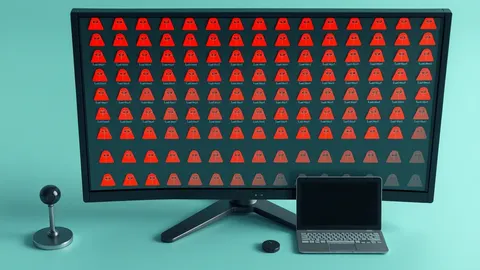
High alert volume trains analysts to ignore warnings, turning your security stack into a silent monitor that hides real attacks in plain sight.

A new partnership combines academic research with industry threat data to improve cyber defense for operational technology in Singapore and the region.

Network scanning reveals hidden infrastructure by exploiting protocol quirks, often bypassing perimeter defenses that only inspect established connections.

Canary tokens transform passive files into active sensors that report unauthorized access through out-of-band channels, bypassing standard network defenses.

Signature-based detection fails when rules lack context, turning high-fidelity sensors into noise generators that obscure real threats rather than revealing them.

Alert triage reduces noise but creates a hidden bottleneck that slows response to subtle threats like DNS tunneling or living-off-the-land attacks.

Purple teaming replaces the annual audit with continuous dialogue, turning defensive blind spots into immediate engineering improvements rather than report findings.

Mean time to detect measures the interval between an initial compromise and when your team realizes something is wrong, shaping your entire response strategy.

Network traffic analysis reveals hidden threats by examining packet headers and flow metadata, exposing attacks that bypass traditional endpoint security controls.

Raw packet data contains hidden application logic that network signatures miss, allowing you to reconstruct attacker actions even when endpoint logs are destroyed.

Standard system tools create subtle behavioral anomalies that persist long after the initial compromise, requiring a shift from signature matching to context-aware monitoring.

Windows event logs record system actions, but monitoring them requires filtering noise to find specific behavioral patterns that indicate compromise.

Small businesses can detect data exfiltration by analyzing DNS query patterns rather than inspecting every encrypted web packet.

Standard firewalls often miss DNS tunneling because the protocol mimics legitimate name resolution, allowing data exfiltration through plain text queries.