Alert Triage Mistakes and Fixes for Security Analysts
Triage failures often stem from cognitive biases and tool misconfiguration rather than a lack of technical skill or insufficient data volume.

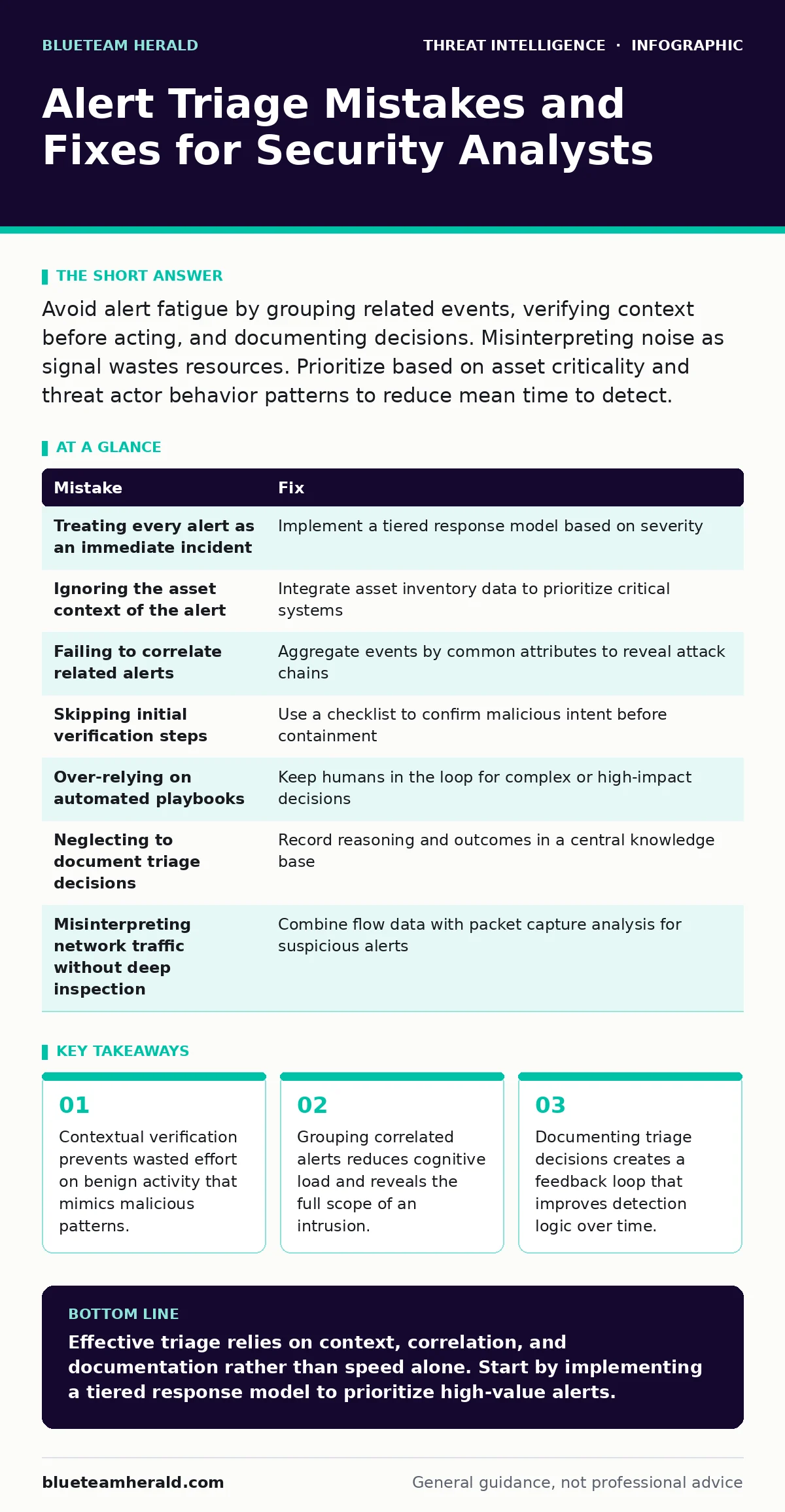
Avoid alert fatigue by grouping related events, verifying context before acting, and documenting decisions. Misinterpreting noise as signal wastes resources. Prioritize based on asset criticality and threat actor behavior patterns to reduce mean time to detect.
Mistake 1: Treating every alert as an immediate incident
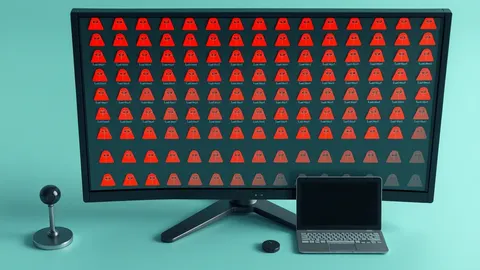
Why it hurts: Security operations centers generate thousands of alerts daily. Investigating each one with equal urgency creates alert fatigue. Analysts become desensitized to warnings. This desensitization causes them to miss subtle indicators of compromise. The team burns through its daily capacity on low-value tasks. High-priority threats get buried under a mountain of noise.
The fix: Implement a tiered response model. Classify alerts by severity and potential impact. Use automated rules to suppress known benign activity. Focus human effort on alerts that indicate active exploitation or data exfiltration. Refer to guides on false positives in threat detection to refine your filtering logic. This approach preserves analyst energy for genuine threats.
Mistake 2: Ignoring the asset context of the alert
Why it hurts: An alert on a critical database server carries different weight than the same alert on a development laptop. Treating all endpoints equally obscures the true risk. You might waste hours investigating a harmless scan on an isolated test machine. Meanwhile, a similar pattern on a production server indicates active data theft. Context determines the urgency and scope of the response.
The fix: Integrate asset inventory data into your triage workflow. Tag systems by criticality, function, and data sensitivity. When an alert fires, immediately check the asset’s profile. Adjust your investigation depth based on this profile. High-value assets demand deeper forensic analysis. Lower-value assets can often be resolved with automated containment or simple verification.
Mistake 3: Failing to correlate related alerts
Why it hurts: Modern attacks generate multiple signals across different systems. Treating each alert in isolation hides the attack chain. You might see a failed login, then a successful one, then a privilege escalation. If you investigate these separately, you miss the narrative. The attacker moves laterally while you chase individual symptoms. Correlation reveals the attacker’s intent and current position.
The fix: Use tools that aggregate events by source, destination, or user account. Look for patterns that span multiple timeframes and systems. Group alerts that share common attributes. This reduces the number of individual investigations. It also provides a clearer picture of the attack’s progression. Understanding the sequence helps you identify the root cause rather than just the endpoint.
Mistake 4: Skipping initial verification steps
Why it hurts: Jumping straight to containment without verification can disrupt business operations. You might isolate a server that is performing a legitimate backup. This causes downtime and erodes trust between security and IT teams. Verification ensures that the alert represents actual malicious activity. It prevents false positives from becoming operational incidents.
The fix: Establish a quick verification checklist. Check for recent maintenance windows or authorized changes. Verify the process name and user account against known baselines. Look for additional evidence in logs or network traffic. Only proceed to containment after confirming malicious intent. This step balances security urgency with operational stability.
Mistake 5: Over-relying on automated playbooks
Why it hurts: Automated response systems, often called SOAR, excel at repetitive tasks. They struggle with nuanced situations that require human judgment. Blind trust in automation can lead to incorrect containment actions. An automated script might block a legitimate application because it matches a malware signature. Human oversight is necessary to interpret ambiguous signals and prevent collateral damage.
The fix: Use automation for standard, low-risk responses. Keep human analysts in the loop for complex or high-impact decisions. Review automated actions regularly to ensure they align with current policies. Adjust playbooks based on feedback from manual investigations. This hybrid approach combines speed with accuracy. It ensures that automation supports rather than replaces human expertise.
See also: 7 PowerShell Mistakes That Leave Your Network Exposed · False Positives Rate: How to Lower Noise Without Missing Threats
Mistake 6: Neglecting to document triage decisions
Why it hurts: Without documentation, every investigation starts from scratch. Analysts repeat work that has already been done. Valuable insights about attacker tactics are lost. The organization fails to learn from past incidents. This leads to recurring mistakes and inefficient use of resources. Documentation creates an institutional memory that improves future responses.
The fix: Record the reasoning behind every triage decision. Note the evidence reviewed, the conclusion reached, and any actions taken. Store this information in a central knowledge base. Use these records to refine detection rules and response procedures. This practice reduces mean time to detect for similar future events. It also provides audit trails for compliance and post-incident reviews.
Mistake 7: Misinterpreting network traffic without deep inspection
Why it hurts: Surface-level network monitoring can miss encrypted or obfuscated traffic. You might see normal-looking data flows that actually contain command-and-control communications. Relying solely on flow data ignores the content of the packets. This allows sophisticated threats to evade detection. Deep inspection reveals anomalies that flow data cannot show.
The fix: Combine network flow analysis with packet capture analysis for suspicious alerts. Inspect the payload of flagged traffic to identify malicious indicators. Look for unusual protocols or unexpected data volumes. This deeper level of scrutiny catches threats that hide in plain sight. It provides the evidence needed for confident containment and eradication.
| Mistake | Fix |
|---|---|
| Treating every alert as an immediate incident | Implement a tiered response model based on severity |
| Ignoring the asset context of the alert | Integrate asset inventory data to prioritize critical systems |
| Failing to correlate related alerts | Aggregate events by common attributes to reveal attack chains |
| Skipping initial verification steps | Use a checklist to confirm malicious intent before containment |
| Over-relying on automated playbooks | Keep humans in the loop for complex or high-impact decisions |
| Neglecting to document triage decisions | Record reasoning and outcomes in a central knowledge base |
| Misinterpreting network traffic without deep inspection | Combine flow data with packet capture analysis for suspicious alerts |
Key takeaways
- Contextual verification prevents wasted effort on benign activity that mimics malicious patterns.
- Grouping correlated alerts reduces cognitive load and reveals the full scope of an intrusion.
- Documenting triage decisions creates a feedback loop that improves detection logic over time.
Effective triage relies on context, correlation, and documentation rather than speed alone. Start by implementing a tiered response model to prioritize high-value alerts.
Frequently asked questions
How do I reduce alert fatigue without missing threats?
Group correlated alerts and suppress known benign activity. Focus human effort on high-severity events that require nuanced judgment.
What is the first step in triaging a new alert?
Verify the asset context and check for recent authorized changes. This helps distinguish between malicious activity and legitimate operations.
Should I always use automated response for containment?
No. Use automation for routine tasks. Keep human oversight for complex incidents to prevent collateral damage and ensure accurate decisions.
How does documentation improve future triage?
It creates a knowledge base that helps analysts recognize patterns. This reduces investigation time and improves the accuracy of detection rules.
How this guide was produced: written by the BlueTeam Herald editorial team with AI assistance, checked against the public references listed below, and reviewed when the facts change. See our editorial policy or report an error.