Medical Identity Theft: How It Works and How to Stop It
Thieves target health records because the data never expires, creating permanent financial and clinical risks that standard credit monitoring misses.

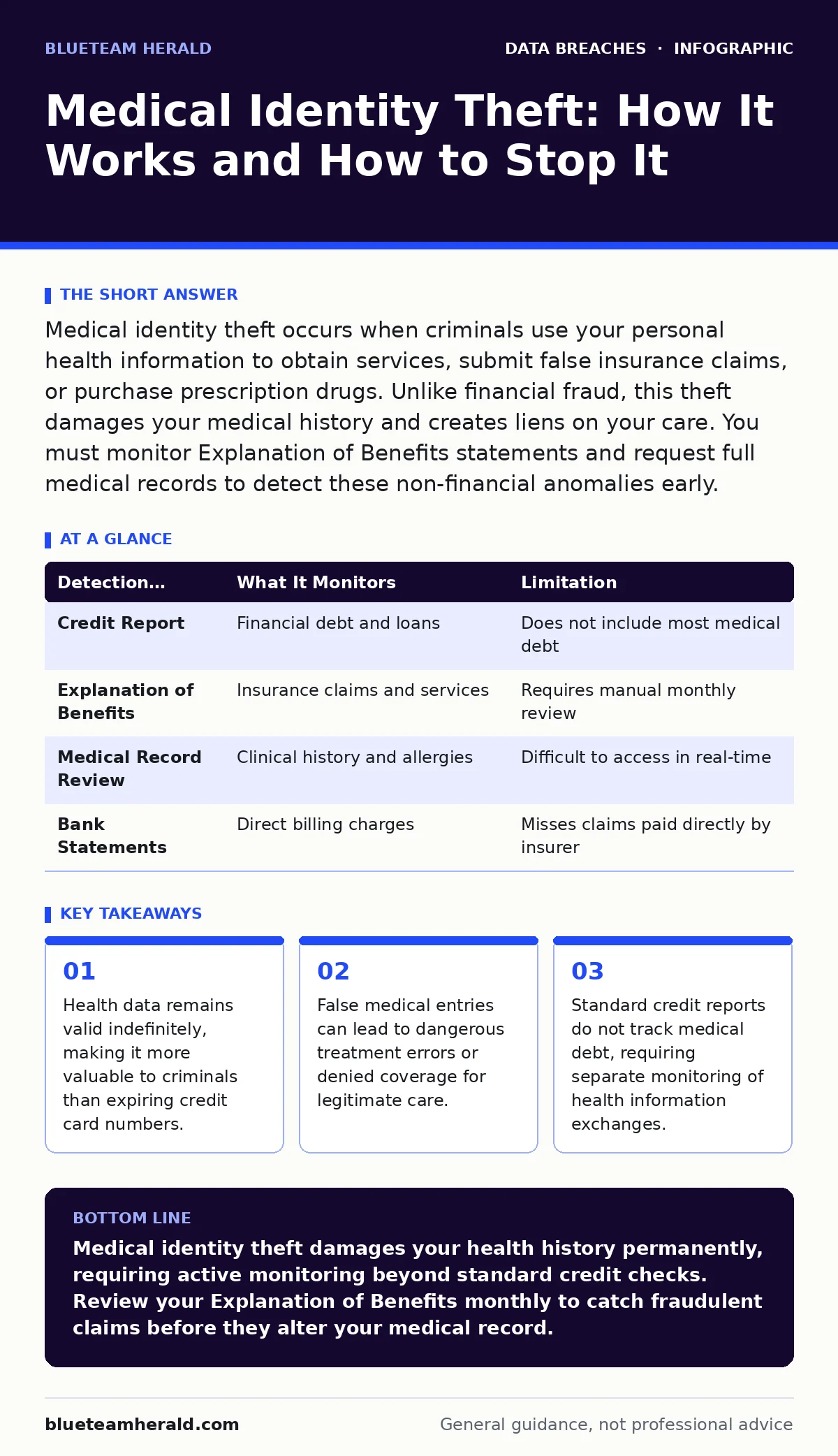
Medical identity theft occurs when criminals use your personal health information to obtain services, submit false insurance claims, or purchase prescription drugs. Unlike financial fraud, this theft damages your medical history and creates liens on your care. You must monitor Explanation of Benefits statements and request full medical records to detect these non-financial anomalies early.
What exactly is medical identity theft?
Medical identity theft happens when an attacker uses your name, date of birth, and insurance details to access healthcare services or submit fraudulent claims. This differs from financial fraud because the stolen data is tied to your physical health history rather than just your bank balance. The thief does not need to know your passwords; they only need enough personal identifiers to bypass basic verification.
Why is health data more valuable than financial data?
Health records never expire, whereas credit cards and bank accounts have limited lifespans. A stolen credit card becomes useless once cancelled, but your name and date of birth remain constant throughout your life. This permanence allows criminals to reuse your identity for years, submitting small claims that accumulate into significant debt or altering your clinical history permanently.
How do criminals typically obtain medical information?
Attackers often acquire health data through breaches of healthcare providers, pharmacies, or health insurance companies. They may also intercept unsecured emails containing patient portals or steal physical documents from trash. Another common vector is phishing, where deceptive messages trick victims into revealing sensitive health identifiers. Understanding these entry points helps you prioritize securing your digital and physical records.
Can medical identity theft affect my actual healthcare?
Yes, false entries in your medical record can lead to severe clinical consequences. Imagine a thief uses your identity to receive treatment for a condition you do not have, such as a blood transfusion or surgery. Your medical history will then incorrectly show allergies, blood type, or past procedures, potentially causing doctors to prescribe dangerous medications or delay critical care during an emergency.
How do I detect medical identity theft early?
You must review your Explanation of Benefits (EOB) statements from your insurer every month, regardless of whether you received care. An EOB details every service billed to your plan, allowing you to spot unfamiliar procedures or providers. If you do not receive EOBs digitally, request them by email to ensure timely review. This manual check is the most reliable method because automated alerts often miss low-value fraudulent claims.
| Detection Method | What It Monitors | Limitation |
|---|---|---|
| Credit Report | Financial debt and loans | Does not include most medical debt |
| Explanation of Benefits | Insurance claims and services | Requires manual monthly review |
| Medical Record Review | Clinical history and allergies | Difficult to access in real-time |
| Bank Statements | Direct billing charges | Misses claims paid directly by insurer |
See also: Account Takeover Protection: Mechanisms, Trade-offs, and Defense · Customer Data Exposure: How to Find and Fix Hidden Leaks
What should I do if I suspect my identity is stolen?
Contact your health insurer immediately to report the fraud and place a fraud alert on your account. Request a copy of your full medical records from every provider involved to identify exactly which services were falsely billed. Dispute the incorrect entries with both the provider and the insurer to ensure they are removed from your permanent history. This process protects your clinical accuracy and prevents future billing errors.
Why doesn't a credit freeze stop medical identity theft?
A credit freeze restricts access to your financial credit report but does not protect your health information. Medical providers and insurers do not check credit reports when verifying your identity for treatment. Consequently, a criminal can still use your personal details to access care or submit claims even if your credit is frozen. You need specific health data monitoring, not just financial protections.
How does this relate to other security risks?
Medical data breaches often stem from the same vulnerabilities that lead to email account compromise or stolen session tokens. If a hacker gains access to a patient portal via a weak password, they can harvest years of health history. This highlights the need for vendor risk management, as many breaches occur through third-party software providers rather than the hospital itself. Securing these upstream connections is vital for protecting downstream health data.
Can I remove false information from my medical record?
You have the right to request corrections to your medical records under privacy laws, but the process can be slow. Providers must investigate the dispute, which may take weeks, leaving the false information active during that time. In the meantime, inform any new doctors of the discrepancy to prevent treatment errors. Persistent follow-up is required to ensure the correction is reflected across all health information exchanges.
How do breach notification laws affect me?
Breach notification laws require healthcare providers to inform you if your data is compromised, but these notices often arrive weeks or months after the incident. By the time you receive the letter, criminals may have already used your information. Do not wait for official notification; proactively monitor your health data and consider placing a fraud alert with your insurer if you suspect exposure. This proactive stance reduces the window of opportunity for thieves.
What is the long-term impact on my insurance?
Undetected medical identity theft can lead to higher premiums or denied coverage in the future. Insurers may view your history as high-risk based on the fraudulent claims, affecting your ability to get affordable care. Additionally, some states allow medical debt to appear on credit reports, further complicating your financial standing. Regular audits of your health records are necessary to maintain both clinical and financial integrity.
Key takeaways
- Health data remains valid indefinitely, making it more valuable to criminals than expiring credit card numbers.
- False medical entries can lead to dangerous treatment errors or denied coverage for legitimate care.
- Standard credit reports do not track medical debt, requiring separate monitoring of health information exchanges.
Medical identity theft damages your health history permanently, requiring active monitoring beyond standard credit checks. Review your Explanation of Benefits monthly to catch fraudulent claims before they alter your medical record.
Frequently asked questions
Does health insurance cover losses from medical identity theft?
Most standard health insurance policies do not cover the financial losses or legal fees associated with identity theft. You may need separate identity theft protection insurance to recover these costs.
How long does it take to fix a medical record?
Correcting a medical record can take several weeks to months, depending on the provider’s investigation process. During this time, you must manually inform new doctors of the error.
Can I sue the hospital for a data breach?
You may have legal recourse if negligence is proven, but class-action lawsuits are common and individual payouts are often low. Focus on immediate mitigation steps like fraud alerts and record disputes.
Is medical identity theft a federal crime?
Yes, it is prosecuted under federal laws regarding fraud and identity theft. However, enforcement prioritizes large-scale criminal operations over individual victims, making personal vigilance critical.
How this guide was produced: written by the BlueTeam Herald editorial team with AI assistance, checked against the public references listed below, and reviewed when the facts change. See our editorial policy or report an error.